Some people led extraordinary lives
Our 'King-soldier' Pedro IV, the 'Liberator', was born in Portugal 228 years ago.
When he turned 24 he was proclaimed the first emperor of Brazil, the former Portuguese colony, to which he had recently given independence. That day was also a 12th of October, of 1822. Over the course of Pedro's short life (34years) he abdicated the throne twice, was father to 19 children and fought many battles for freedom in two different continents. Pedro's heart, the actual organ, is still nowadays the most amazing treasure the city of Porto has in its care. He's definitely one of the most fascinating characters in the Portuguese history! In this post I share a couple more of great -&real- stories about him. 
The perfect romantic hero
Pedro IV's equatorial statue in Porto
Pedro was a force of nature, capable of fist-fighting like a villain, swearing like a trooper, and writing the most passionate, intense love letters to his mistresses. On the other hand, he could also compose music and be very tender and loving with children.
He also suffered from epilepsy, which caused him to have seizures regularly, even during official ceremonies. This, however, never limited him. In a nutshell, Pedro was a man of violent passions, made of excesses and contradictions. "Independence or death"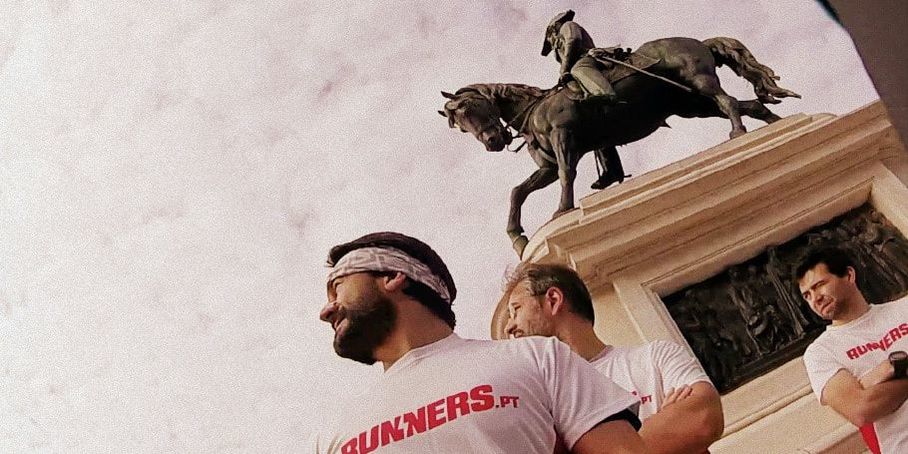
Pedro grew up in Brazil, having fled to Rio de Janeiro from Lisbon in 1807 with the Portuguese royal family to escape the French Napoleonic troops invading the Iberian Peninsula. He was his father's favorite son, while his brother, Miguel, was his mother's.
Although the two brothers were raised together, they developed completely different characters and personalities. They ultimately ended up on opposite sides of a civil war in Portugal after their mother allegedly ordered their father, king João VI, to be poisoned. 
Cartoon by the Honoré Daumier, with the two Portuguese antagonists - brothers Pedro and Miguel (with the crown) - supported and instigated, respectively, by the French liberals, and by Russian Czar, that represented the traditional monarchies.
Before all that, when João VI returned to Portugal in 1821 and left Pedro in Rio de Janeiro, he wisely foresaw the future and told Pedro:
"Pedro... soon Brazil will be separated from Portugal. If that happens, place the crown on your own head before some adventurer tries to grab it." Many events later, Pedro declared Brazil's independence with the famous "Grito do Ipiranga" (the Cry of Ipiranga), proclaimed on the banks of the Ipiranga brook in present-day São Paulo. He was later declared the first Emperor of Brazil on October 12, 1822! 
The story about a white horse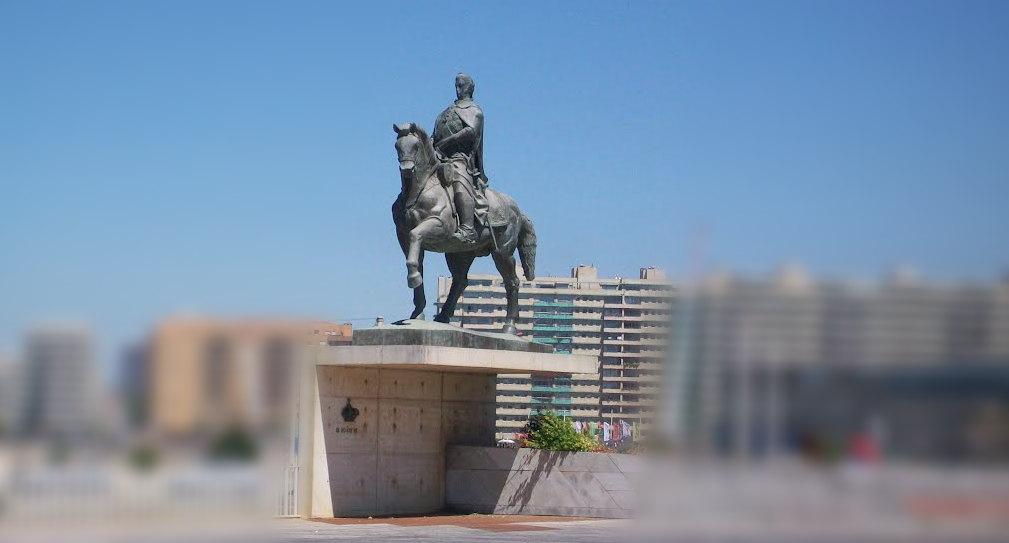
While Pedro was given a central spot in Praça da Liberdade ('freedom's square') in Avenida dos Aliados, his father João VI was also offered a great location here in Porto. He's also on his horse, close to the Atlantic, at the very end of Avenida da Boavista. So... two monarchs on horses: this calls for a story. Here's one that shows just how impulsive Pedro IV could be:
Pedro decided to offer his father a beautiful white horse that he cherished. He took perfect care of this horse for months himself. But, when the suspicious João VI saw the animal, he just asked Pedro if it was meant for him to fall off the horse. Absolutely furious by the unexpected question, Pedro snapped and replied "Well, if the horse is not for you, then it will not be for anyone else". And he galloped away on the horse, (fast and) furious, and he rode it until the poor animal died, of hyperthermia. Porto's most precious treasure
On the mayor's desk lie five special keys: the ones that open the doors and vault where Pedro's heart is kept - the actual organ! Irmandade da Lapa, a religious organization, is responsible for its care and safe storage in Lapa's church, in Porto, where Pedro regularly attended religious ceremonies during the 1832-33 siege. The siege was part of the nation wide conflict that opposed him and his brother Miguel
The siege is also the motive that led Pedro to write his wish down in paper: as an act of appreciation for all the support and love he'd received from the people here in Porto, his heart should be handed to the city. An act full of symbolism from one of our most passionate monarchs...!! A few months later, Pedro died of tuberculosis due to the harsh conditions he endured while fighting alongside the people of Porto. An autopsy revealed numerous other health problems affecting almost every organ in his body. His body was later taken to São Paulo, Brazil, but his strong, impulsive heart was handed over to the authorities of Porto. It is our most precious treasure, a symbol of hard-earned freedom. 
Rui Moreira, Porto's mayor at the time, holding Pedro's heart in 2015, when it was publicly displayed.
Here's a short video shot in 2015 (It's in Portuguese, no subtitles unfortunately... sorry!)
Comments are closed.
|
Autor/Author
Sérgio é o fundador da Porto Running Tours, corre regularmente desde 1999 e desde 2015 que guia visitas em corrida na Invicta enquanto revela algumas das suas mais fascinantes histórias. 

Categories
All
Archives
October 2026
PORTO RUNNING TOURSWe're passionate about running and passionate about Porto! REVIEWSWE'RE LISTED ON
Your gateway to fun and unique running tours worldwide.

We practice sustainable tourism!


|

 RSS Feed
EMAIL: info(at)portorunningtours.com
MOBILE/WHATSAPP👆(tap to message)
+351 91 460 10 10
(English/Português)
9.00AM-5.00PM Local Time - Portugal - GMT+00
Porto Running Tours is a
locally owned micro-business,
providing authentic running experiences
in Porto since 2015
locally owned micro-business,
providing authentic running experiences
in Porto since 2015
customer love on-LINE >
Take their word for it:

We practice sustainable tourism. Book directly with us!
member of the worldwide community:
RUNNINGTOURS.NET
RUNNINGTOURS.NET

JOIN OUR COLLEAGUES
AROUND THE WORLD
FOR A RUNNING TOUR!
AROUND THE WORLD
FOR A RUNNING TOUR!

RNAAT nº1410/2017 TURISMO DE PORTUGAL
This website is mobile friendly,IOS and ANDROID! © COPYRIGHT PORTO RUNNING TOURS 2025.
TODOS OS DIREITOS RESERVADOS /ALL RIGHTS RESERVED.
TODOS OS DIREITOS RESERVADOS /ALL RIGHTS RESERVED.