|
Est.reading time: 5 min
Unlikely old stories
Read on to learn more about Porto's relationship with the friendliest and most generous of white-bearded-red-suited old chaps - and find out more about Santa's origins!
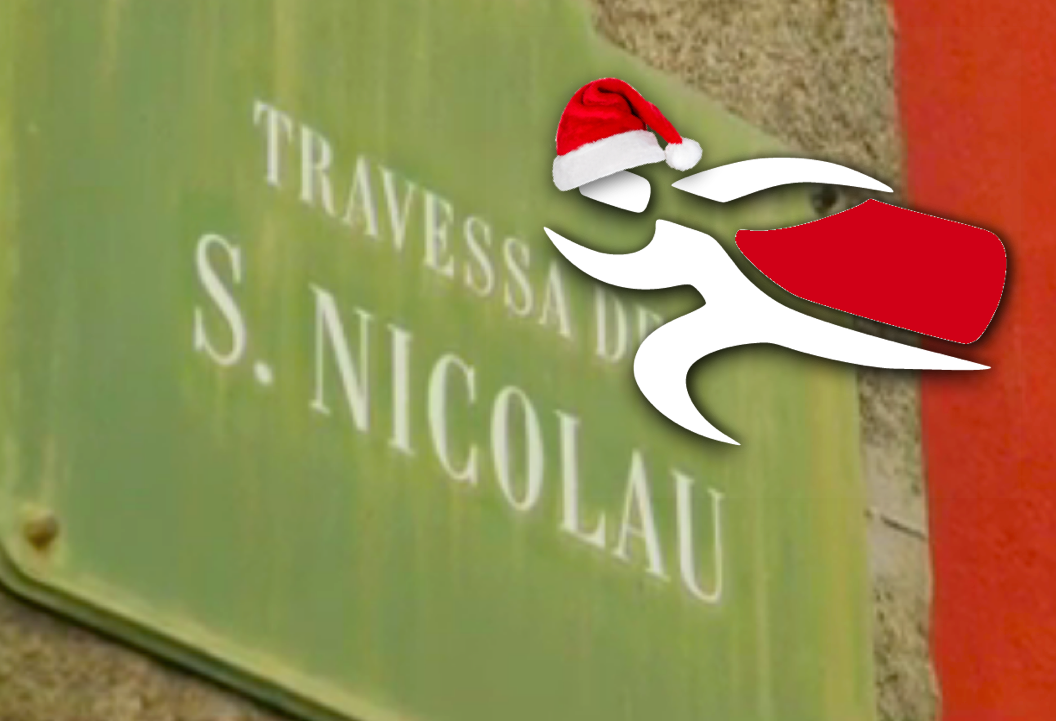
We know for a fact that Santa is featuring Coca-Cola ads since the 1920's. While some say the famous Greek bishop St. Nicholas (aka Santa Klaus, Sinterklaas, Nicolaus, Klaus, Mikulas, Nikolay, Niklas,...!) existed only in legend without any reliable historical evidence, we know that legends usually do grow out of real, actual events, though they may be embellished, interwoven with a bit of imagination.
We believe Christmas season to be the perfect occasion to share a couple of these stories with runners who visit Porto, while running through S. Nicolau district, one of the touristic hotspots of Porto. 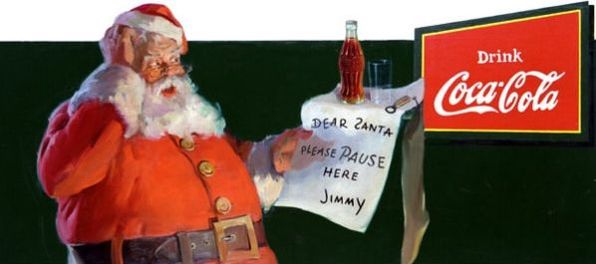
In Porto, Santa goes by the name of Nicolau
It is only natural that a city of merchants, of sailors, this close to the Atlantic, had to devote a church to St.Nicholas - and named a parish after him, São Nicolau.
Why? Several stories tell of Nicholas and the sea. One tells of an episode when Nicholas sought the holy by making a pilgrimage to the Holy Land, walking where Jesus walked, to try experiencing Jesus' life. Returning by sea, a mighty storm threatened to wreck the ship he was in. Nicholas calmly prayed. The terrified sailors in his ship were amazed when the wind and waves suddenly calmed, sparing them all. And so St. Nicholas became the patron of sailors and voyagers. He's presently also the patron saint of Russia, Norway and Greece (and its navy).
Nicholas was so widely revered that thousands of churches were named for him, including thirty-four in Rome, twenty-three in the Netherlands, three hundred in Belgium and more than four hundred in England... oh and, of course, the one in Porto!
Outlined on the map: the district of São Nicolau, in Porto.
The district of São Nicolau includes Ribeira, one of the most instagrammable places of Porto...!
Murder and ressurection: Nicholas' involvement
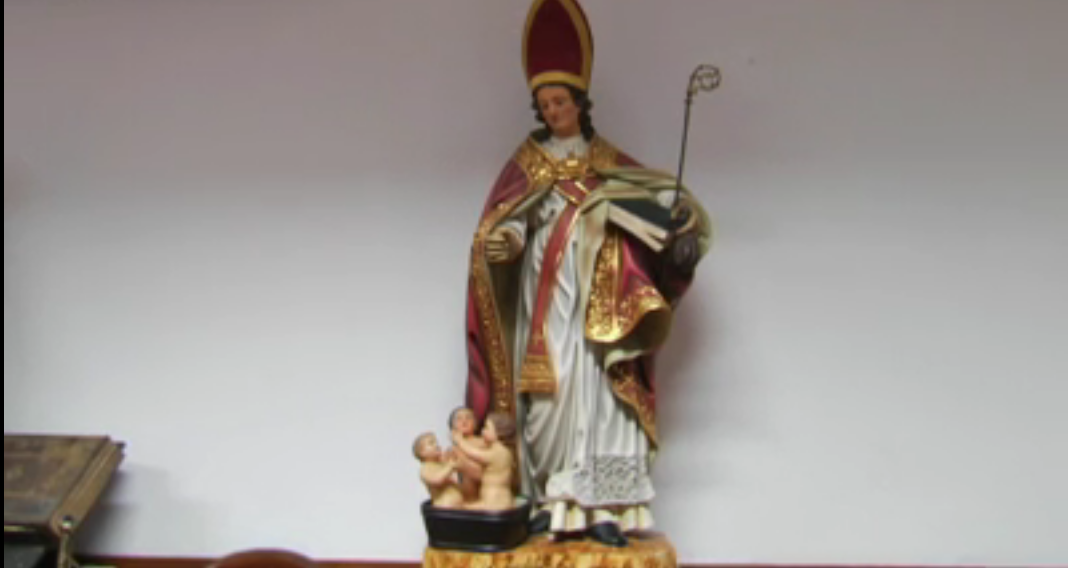
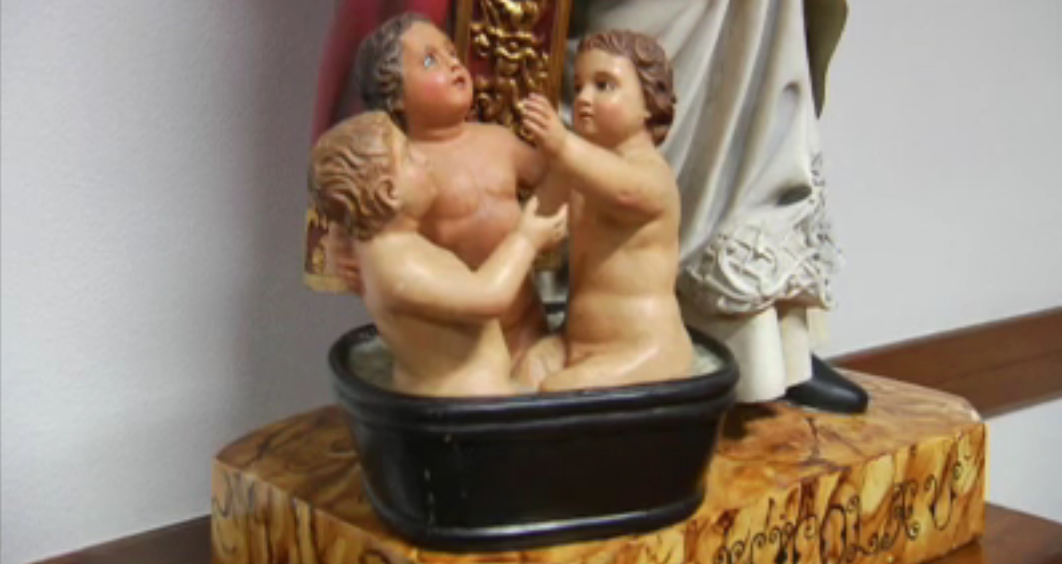
Another (tragic) tale with a happy ending: In France a story is told of three small children, wandering in their play until lost in the woods, lured, and captured by an evil butcher. The butcher then kept their bodies in a basin filled with salt, for conservation. After quite some time, St. Nicholas appears and appeals to God to return them to life and to their families. And hence St. Nicholas became the patron and protector of children.
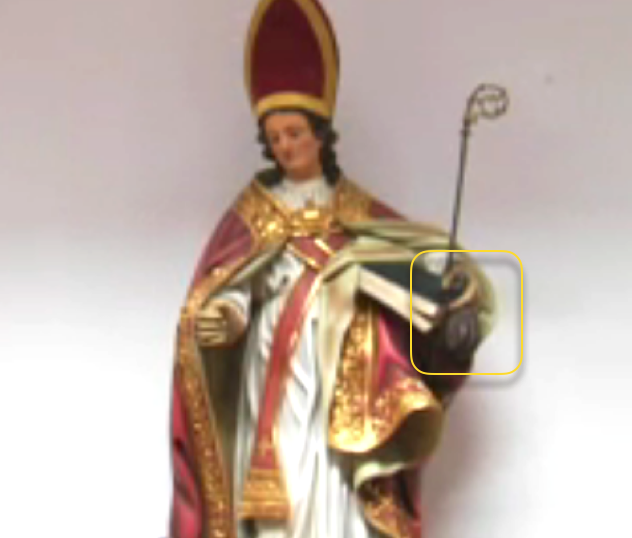
St.Nicholas iconography frequently includes 3 small children in a basin. Here in Porto, in S.Nicolau's church: these two can be seen inside. There's also one outside, in a niche.
Prostitution and St. Nicholas... say what!?
This brings us to our favourite St.Nicholas' story, the one that tells of a poor man with three daughters. In those days in Demre - Nicholas' home region in Turkey/formerly Greece - any young woman's father had to offer prospective husband something of value, a dowry. The larger the dowry, the better the chance that a young woman would find a good husband. Without a dowry, a woman was unlikely to marry.
These poor man's daughters were therefore destined to lead a life of...prostitution. Mysteriously, on three different occasions, a bag of gold appeared inside their home, providing the needed dowries. The bags of gold, tossed by Nicholas through an open window (or chimney, in some versions!), are said to have landed in stockings or shoes left before the fire to dry...!
This led to the custom of children hanging stockings or putting out shoes, eagerly awaiting gifts from Saint Nicholas. And so St. Nicholas became a gift-giver.(source)
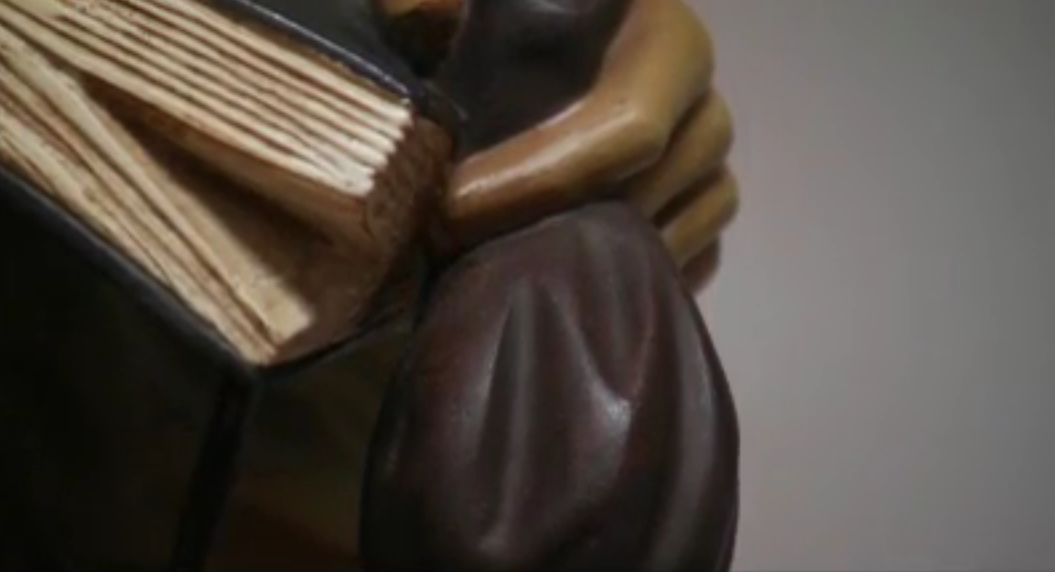
St.Nicholas is traditionally portrayed holding a bag of coins in his hand.
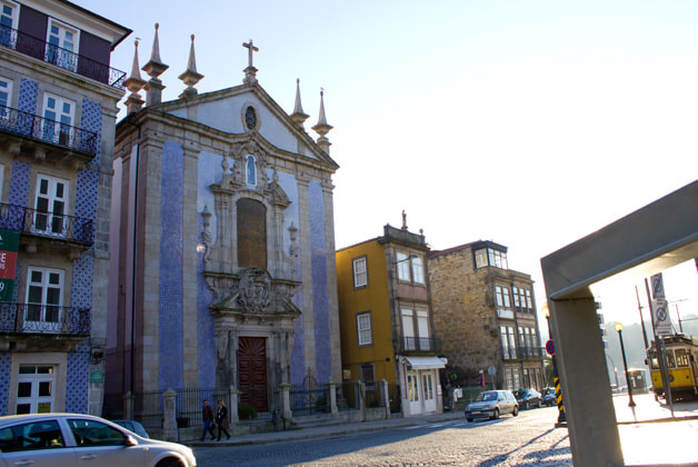
The church of São Nicolau in Porto. Photo credits: visitporto.travel
December 6th: Celebrating St.Nicholas.
December is the month children and shop owners adore - in Slovenia, for instance, in a single month, there are three days on which gifts are given, and the first of them is the traditional St. Nicholas Day. This day, December 6, marks Nicholas' death, which occurred in AD 350 (source).
Another example: In Germany there are both Catholic (katholisch) and Protestant (evangelisch) Christmas customs. When Martin Luther, the great Protestant Reformer, came along, he wanted to get rid of the Catholic elements of Christmas. To replace Sankt Nikolaus (Protestants don’t emphasize saints!), Luther introduced der Heilige Christ (later called das Christkindl), an angel-like Christ Child, to bring Christmas gifts and reduce the importance of Saint Nicholas. Later this Christkindl figure would be replaced by der Weihnachtsmann (Father Christmas) in Protestant regions and even across the Atlantic, where Christkindl mutated into the English term “Kris Kringle”. Ironically, in the present day, the originally Protestant Christkindl is now predominant in the Catholic regions of Germany and Switzerland, as well as in Austria. (source) 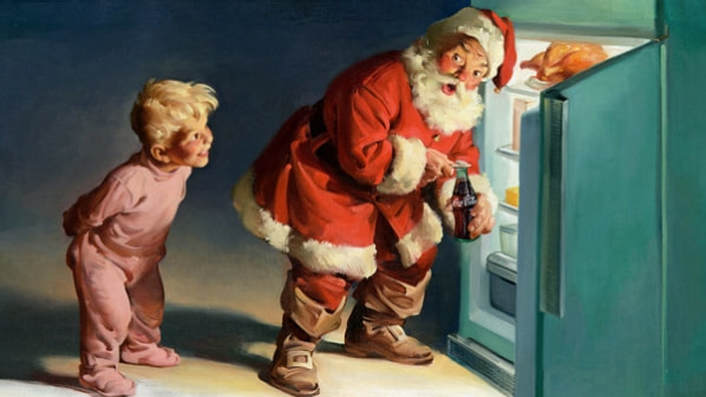
credits: The Coca-Cola company
Nevertheless, St. Nicholas Day is still celebrated across Europe, as children do not feel like giving up their gift bringer that easily, and neither do shop owners.(source) In Porto and Portugal, like in other Catholic European regions, gifts are handed out during Christmas day or in the Eve, December 24th, depending on each family's habits.
photo credits: Porto Lazer
Sarcasm sometimes rhymes with Porto.
A mere 50 meters away, built on top of the ruins of the old S.Francisco convent (destroyed during the siege of Porto), the Merchants Association headquarters Palácio da Bolsa lurks upon S.Nicolau's church. The Merchants Association of Porto, perhaps one of the most catholic-adverse organization in the country was founded back in 1834 and the chosen date for that was, with deep sarcasm.... Christmas day, December 25th !
This exact same organization ordered for one of their building's rooms to be decorated in the Arabic style, boldly writing on its walls "God save Maria II, the Queen" in Arabic language, in order to deeply annoy Porto's Catholic representatives of that time...! 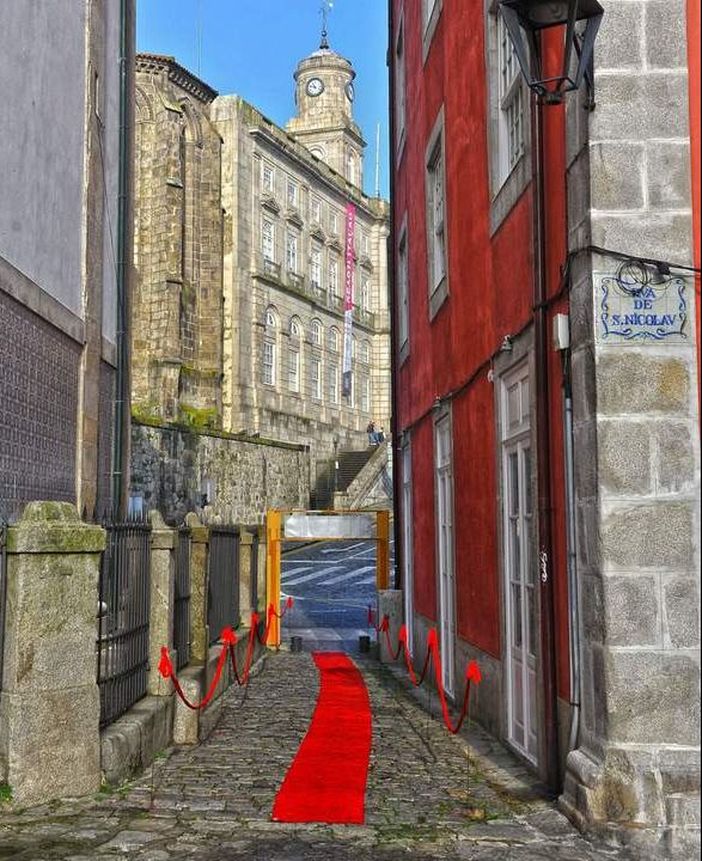
Palácio da Bolsa, as seen from S.Nicolau street. Photo credits: Joaquim Oliveira, 2018
Palácio da Bolsa, headquarters of the Merchants Association of Porto. Credits: ACP
If you're afraid of missing out on any of the Christmas markets this year and really want some company to help you see the most of the street lights in Porto, our recommended option would obviously be.... the one and only... Heart of Porto running tour! ;-)
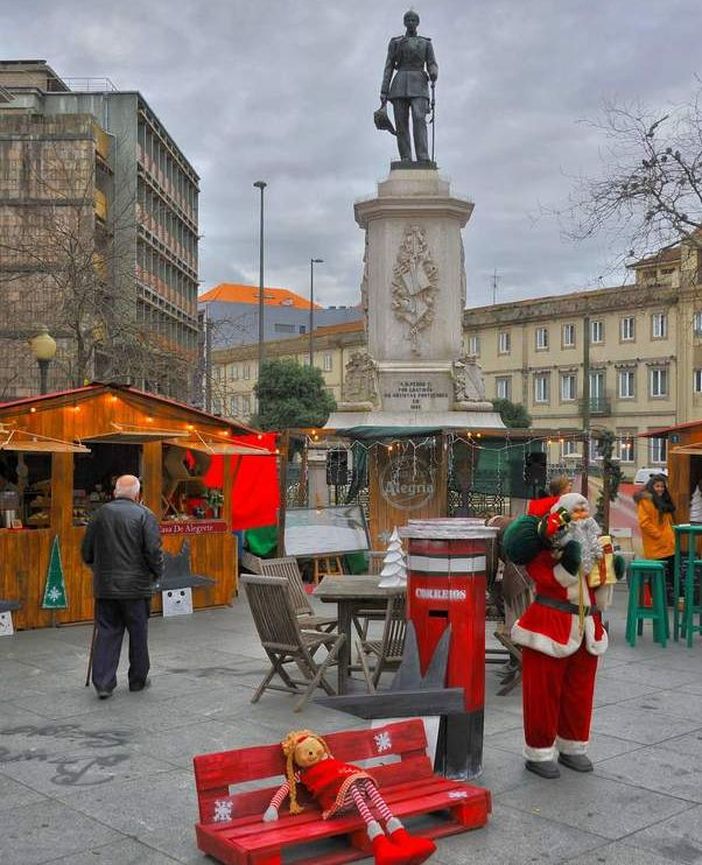
photo credits: Joaquim Oliveira
On behalf of Porto Running Tours' team: I am wishing all of you, runners and non-runners, a merry holiday season! 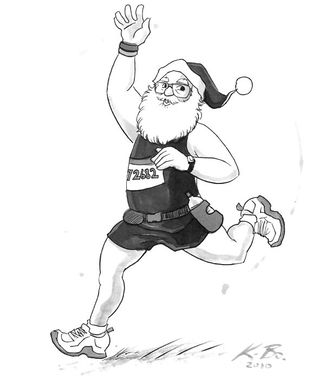
Share this post with your running friends
6/12/2018 22:24:41
It was a great info from the local informant, PRT... Thank you. I used to google so many information online, but few I could find. Now, Portugal being one of the top destinations even for Koreans, we need more to read or person informed us with history and culture... Comments are closed.
|
Autor/Author
Sérgio é o fundador da Porto Running Tours, corre regularmente desde 1999 e desde 2015 que guia visitas em corrida na Invicta enquanto revela algumas das suas mais fascinantes histórias. 

Categories
All
Archives
March 2024
PORTO RUNNING TOURSWe're passionate about running and passionate about Porto! REVIEWSWE'RE LISTED ON
Your gateway to fun and unique running tours worldwide.

We practice sustainable tourism!
|

 RSS Feed
EMAIL: info(at)portorunningtours.com
MOBILE/WHATSAPP👆(tap to message)
+351 91 460 10 10
(English/Português)
9.00AM-5.00PM Local Time - Portugal - GMT+00
Porto Running Tours is a
locally owned micro-business,
providing authentic running experiences
in Porto since 2015
locally owned micro-business,
providing authentic running experiences
in Porto since 2015
customer love on-LINE >
Take their word for it:

We practice sustainable tourism. Book directly with us!
member of the worldwide community:
RUNNINGTOURS.NET
RUNNINGTOURS.NET

JOIN OUR COLLEAGUES
AROUND THE WORLD
FOR A RUNNING TOUR!
AROUND THE WORLD
FOR A RUNNING TOUR!

RNAAT nº1410/2017 TURISMO DE PORTUGAL
This website is mobile friendly,IOS and ANDROID! © COPYRIGHT PORTO RUNNING TOURS 2023.
TODOS OS DIREITOS RESERVADOS /ALL RIGHTS RESERVED.
TODOS OS DIREITOS RESERVADOS /ALL RIGHTS RESERVED.